
Why dApp Integration and MEV Protection Begin Before You Sign
You connect a wallet to a decentralized exchange, approve a token, and submit a swap. The interface shows an acceptable price, so the transaction appears routine. Yet between clicking “confirm” and the transaction becoming final, other actors may observe its contents, compete to place transactions around it, or exploit the difference between the quoted and executable price. In the United States, where retail users often interact with several EVM networks through familiar browser extensions, this gap between interface and execution is easy to overlook.
The common assumption is that a secure Web3 wallet merely protects private keys. That is necessary, but incomplete. A capable wallet also helps the user understand what a dApp is requesting, what state change a transaction may cause, and whether the transaction is exposed to avoidable forms of maximal extractable value, or MEV. The important distinction is that a wallet cannot abolish market structure. It can, however, improve the quality of the user’s decision before an irreversible action is authorized.
The misconception: a wallet either prevents MEV or does nothing
MEV is not one single attack. It is the value available because transaction ordering, inclusion, and execution can affect outcomes. A validator, block builder, searcher, or other participant may profit by arranging transactions around a pending swap, liquidation, arbitrage opportunity, or mint. Some of this activity improves market efficiency; some imposes costs on users. The same broad mechanism can support price convergence while also creating slippage, failed transactions, or unfavorable execution.
A wallet is usually not the party that determines final ordering. That authority depends on the network, the transaction path, the node or relay used for submission, and the actors assembling blocks. Consequently, claiming that a wallet “eliminates MEV” would be misleading. Protection is better understood as a set of risk-reduction measures: clearer simulation, safer routing, private or otherwise less exposed submission where supported, sensible slippage settings, and warnings about suspicious contract behavior.
This distinction matters because the user’s real problem is not simply visibility. It is uncertainty about the transaction’s future consequences. A pending transaction can be visible without being exploitable, and a private submission can still execute poorly if the quoted route is illiquid, the contract is malicious, or the user authorizes an overly broad token allowance.
How dApp integration changes the security question
When a dApp connects to a wallet, it does not receive a blank cheque. It requests permission to read an address, ask the wallet to sign messages, or submit particular transactions. The wallet then becomes an interpretation layer between human intent and machine-readable calldata—the encoded instructions sent to a smart contract.
This is where transaction simulation has practical value. A simulation attempts to execute the proposed call against an estimated blockchain state before the user signs it. The result may reveal the assets expected to leave the account, the assets expected to arrive, a contract interaction that will revert, or a state change that looks materially different from the dApp’s button label. Simulation is not a prediction of the future in the strict sense. It is a conditional analysis: if the relevant state and execution conditions remain sufficiently similar, the simulated result offers evidence about what the transaction may do.
That boundary is important. Blockchain state can change between simulation and inclusion. A pool balance may move, a quote may expire, a block may fill, or a contract may behave differently under a new condition. A simulation therefore reduces ambiguity; it does not create certainty. The most useful wallet experience combines simulation with warnings about token approvals, contract identity, chain selection, gas, and unexpected balance changes.
For DeFi users, this is a more meaningful security model than a simple green checkmark. The question is not “Does the wallet support this dApp?” but “Can the wallet expose the economic and permission consequences of this specific call before authorization?” The answer depends on the quality of the simulation, the information available from the network, and the user’s ability to interpret the result.
Where MEV protection actually operates
There are several points at which users may reduce execution risk. First, the dApp can design trades with bounded slippage, meaning the maximum tolerated difference between the expected and executed price. Second, the wallet or infrastructure may support a submission path that limits public exposure of the pending transaction. Third, the smart contract itself may use mechanisms that make harmful ordering less effective, such as batch execution, auctions, or intent-based settlement.
These approaches address different parts of the problem. Slippage limits cap one type of loss but can also cause a transaction to fail. Private submission may reduce the chance of opportunistic observation but may involve different trust assumptions, availability constraints, or fees. Protocol-level designs can provide stronger structural protection, but they are not available for every dApp or asset. Treating these tools as interchangeable produces false confidence.
There is also a less obvious trade-off. Public transaction visibility enables searchers to compete, but it can also support arbitrage that keeps decentralized exchange prices aligned across venues. Removing all searcher activity is not necessarily desirable. The practical objective is narrower: prevent users from paying unnecessary costs or suffering avoidable execution harm while preserving useful market functions where possible.
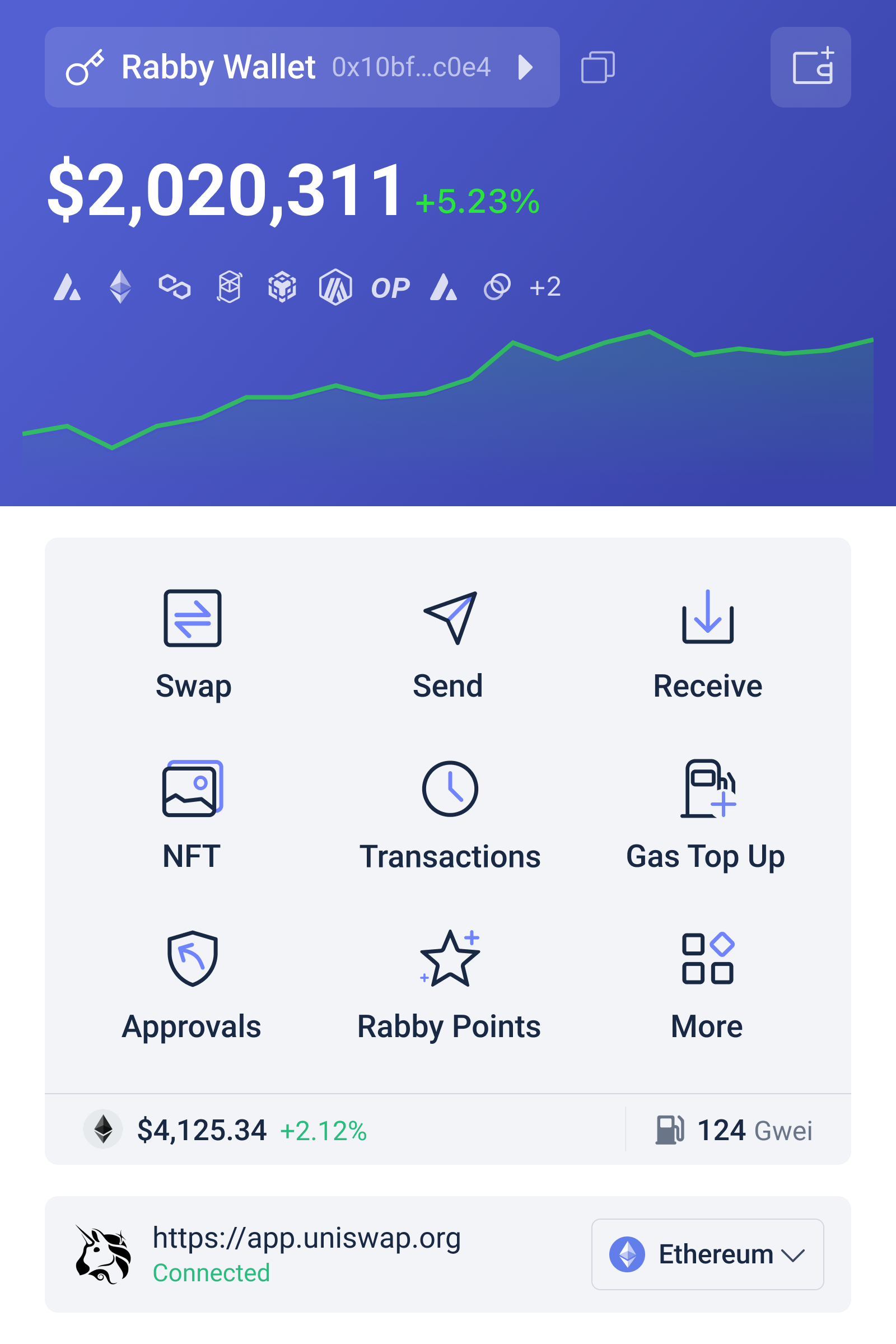
A wallet such as rabby wallet is most valuable in this context when it helps the user inspect the transaction at the point of decision. Its relevance is not that a wallet interface can control every downstream actor. Rather, dApp integration can make risks legible: which chain is active, which contract is being called, what tokens may move, whether the transaction is likely to fail, and whether the requested permission exceeds the immediate task.
The approval problem is often more durable than the swap
Users frequently focus on the swap itself and overlook token approvals. An approval gives a contract permission to transfer a specified amount of a token from the wallet, subject to the token’s implementation and the allowance granted. A limited approval may reduce future exposure compared with an unlimited one, although it can require additional transactions and gas. Revoking an allowance later may also require an on-chain transaction and does not reverse transfers already made.
This creates a useful mental model: a transaction has both an immediate effect and a permission horizon. The immediate effect is what happens now—perhaps one token leaves and another arrives. The permission horizon concerns what the approved contract may be able to do later, especially if the contract is compromised, upgraded, misidentified, or used through a malicious interface. A wallet that highlights only the immediate swap amount but hides the approval scope is providing an incomplete safety picture.
Simulation helps, but it must be read critically. A benign simulation result does not establish that a contract is trustworthy, that the dApp domain is authentic, or that future calls will remain safe. Security warnings are signals for investigation, not substitutes for judgment. The strongest workflow is layered: verify the network and dApp, inspect the requested permissions, review the simulated balance changes, set reasonable slippage, and avoid signing when the result is unexplained.
A practical framework for advanced Web3 users
Before signing a consequential DeFi transaction, ask four questions. What is the intended economic action? What exact contract and chain will receive the call? What assets and permissions does the simulation show? What can change between now and inclusion?
The fourth question is particularly valuable because it separates deterministic information from execution risk. A transfer to a known address may be relatively straightforward, while a multi-step swap through several pools has more dependencies. A transaction that relies on a narrow price range, a short deadline, or a congested network deserves closer attention than one with wide execution tolerance and simple state changes.
For US users managing assets across Ethereum and other EVM-compatible networks, chain confusion is an additional practical hazard. Similar addresses, familiar dApp branding, and network switching can make an incorrect chain selection look superficially normal. A wallet designed for broad EVM use should therefore be judged not only by the number of supported networks, but by how clearly it communicates network context at the moment of signing.
The recent positioning of Rabby Wallet around Ethereum and EVM use, including access through Chrome and Brave, is relevant as a product direction rather than proof that every transaction is safe. Broad compatibility can reduce friction, but lower friction can also encourage faster signing. The safety benefit appears only if the interface uses that convenience to improve inspection rather than bypass it.
What to watch next
The next meaningful developments are likely to concern coordination among wallets, dApps, builders, and transaction-submission infrastructure. If wallets can display more reliable execution outcomes, dApps can express intent and slippage constraints more precisely, and networks can offer clearer ordering guarantees, users may gain protection without needing to understand every detail of block construction.
That outcome is conditional. Better interfaces cannot compensate for malicious contracts, thin liquidity, compromised devices, or users who approve unexplained requests. Nor can a private route guarantee a favorable price. The signal worth watching is whether tools disclose their assumptions: what was simulated, against which state, through which submission path, and which risks remain outside the wallet’s control.
Frequently Asked Questions
Can a Web3 wallet completely prevent MEV?
No. MEV depends on transaction ordering, network participants, liquidity, protocol design, and submission infrastructure. A wallet can help reduce exposure through simulation, warnings, slippage awareness, and supported submission methods, but it cannot guarantee a particular execution price or eliminate all ordering effects.
Does transaction simulation guarantee that a dApp is safe?
No. Simulation estimates what a call may do under a particular blockchain state. It can reveal unexpected transfers or likely failure, but it does not prove that the contract is trustworthy, that the website is authentic, or that conditions will remain unchanged before inclusion.
What should I inspect before signing a DeFi transaction?
Check the active network, destination contract, assets leaving and entering the wallet, token approval scope, slippage tolerance, gas cost, and any warning or simulation result. If the transaction’s purpose cannot be explained in ordinary language, postponing the signature is usually the more rational choice.
The durable lesson is simple but easy to miss: wallet security is not only about keeping keys secret. It is also about improving the user’s information before an irreversible commitment. dApp integration, transaction simulation, and MEV-aware submission can narrow important risks, but their value depends on transparent assumptions and careful interpretation. The safest interface is not the one that makes signing effortless; it is the one that makes the consequences difficult to misunderstand.