
MEV Protection in DeFi: Why the Wallet Is Becoming Part of the Protocol
The most expensive transaction mistake in DeFi is not always a bad trade. Sometimes it is a perfectly valid trade submitted at the wrong time, with the wrong visibility, or without understanding how other actors can react before it settles. That is the counterintuitive part of maximal extractable value, or MEV: the user may lose value even when the smart contract behaves exactly as designed.
MEV protection is therefore not a single switch labeled “private transaction.” It is a coordination problem involving wallets, decentralized applications, block builders, validators, liquidity, and the transaction’s own assumptions. For US-based DeFi users moving between Ethereum and EVM-compatible networks, the practical question is less “Which protocol promises protection?” and more “Which part of the transaction lifecycle is actually being protected, from what threat, and at what cost?”
MEV begins before a transaction reaches the blockchain
When a user submits a transaction, it is usually broadcast to a network before inclusion in a block. Depending on the chain and the transaction path, information about the intended action may be visible to infrastructure that can observe, reorder, bundle, or simulate transactions. This visibility creates opportunities for searchers and block producers.
Consider a large swap on an automated market maker. The swap changes the ratio of assets in a liquidity pool. If another actor sees the pending transaction, that actor may attempt to trade immediately before it, then trade after it, capturing part of the price movement created by the user. This familiar pattern is commonly called a sandwich attack. The user still receives tokens and the protocol may report a successful execution, but the execution price can be materially worse than expected.
Other MEV strategies are less visible to ordinary users. Arbitrageurs may reorder trades across venues to align prices. Liquidators may compete to close undercollateralized positions. On-chain governance, NFT minting, and liquidation events can also create ordering incentives. MEV is not automatically malicious: some forms help keep markets aligned or ensure that liquidations occur. The boundary matters, however, because value that supports market efficiency is different from value extracted through avoidable information asymmetry.
What MEV protection can—and cannot—do
MEV protection generally works by changing who can see a transaction, when they can see it, or which ordering rules apply before execution. A private transaction route may send an order to a specialized relay or builder rather than exposing it broadly in a public transaction pool. A protocol may use batch auctions, intent-based execution, or internal matching to reduce the advantage of reacting to one user’s order. A wallet may help the user set tighter slippage limits, simulate the call, or warn when the transaction interacts with an unusual contract.
These mechanisms address different failure points. Privacy can reduce the opportunity to copy or sandwich a pending trade, but it does not guarantee a good execution price. A simulation can reveal that a call will fail, transfer an unexpected token amount, or grant a dangerous allowance, but it cannot predict every future state change or guarantee how a block producer will order transactions. Slippage controls can cap the damage from adverse price movement, yet setting them too tightly may cause legitimate transactions to revert.
This distinction is essential. “Protected from MEV” is too broad to be a useful technical claim unless the protection is defined. A user might be protected from public mempool observation but still face price impact, thin liquidity, oracle risk, malicious contract logic, or a compromised front end. Security is layered, not binary.
Why dApp integration is the difficult part
A wallet does not control the entire execution environment. It sits between the user and a decentralized application, usually preparing a transaction from data supplied by the dApp. That makes integration quality decisive. If a decentralized exchange provides incomplete transaction metadata, uses a confusing approval flow, or constructs a call whose economic meaning is difficult to inspect, even a capable wallet has limited room to help.
Good integration exposes the transaction’s intent in terms a user can evaluate. The wallet should be able to identify the target contract, distinguish a token approval from a token transfer, estimate the assets entering and leaving the account, and flag suspicious or unusually broad permissions. For a DeFi position, it is also useful to understand whether the action opens debt, changes collateral, triggers a swap, or delegates control to another contract.
Simulation adds a second layer. A wallet can execute a proposed transaction against a recent or hypothetical chain state without publishing it, then report likely balance changes, failures, and contract effects. This is valuable because the most dangerous transaction is often not an obviously malicious one; it is a call that looks ordinary in a browser interface but behaves differently when signed.
Yet simulation has boundaries. It is a forecast conditioned on the state and assumptions used for the simulation. The blockchain may change before inclusion. A token may have transfer taxes or nonstandard behavior. A contract may depend on block timestamps, external prices, or interactions that are difficult to reproduce exactly. Simulation improves the user’s information; it does not eliminate uncertainty.
Protocol-level defenses and their trade-offs
DeFi protocols can reduce MEV exposure through several designs. Batch execution groups orders and settles them together, making it harder to identify a profitable sequence between individual trades. Frequent batch auctions can match buyers and sellers at a common clearing price, reducing the value of racing to be first. Intent-based systems allow users to specify an outcome—such as receiving at least a certain amount—while competing executors seek to fulfill it.
These approaches shift complexity away from the user, but they introduce new questions. Who selects the executor? How are competing solvers evaluated? Can the system censor an order, delay it, or favor a particular route? Does the protocol distribute surplus back to users, liquidity providers, or intermediaries? A design that reduces sandwich attacks may still concentrate execution power in a small group of participants.
Private order flow creates a similar trade-off. It can prevent broad public observation, but it may make the system less transparent and increase dependence on relays or builders. If a private route fails, the wallet may need a fallback path, and that fallback could expose the transaction. Users should treat privacy routing as risk reduction, not as an absolute confidentiality guarantee.
There is also a market-structure limitation: MEV cannot simply be wished away. If a trade creates a predictable price discrepancy, someone has an incentive to capture it. The meaningful policy and engineering question is whether that value is captured through fair competition and returned partly to users, or extracted through opaque ordering advantages that impose costs on less informed participants.
A practical framework for DeFi users
Before signing a transaction, separate three questions. First, what is the economic action? Is it a swap, approval, deposit, borrow, liquidation, or contract upgrade interaction? Second, what can change between signing and execution? Consider price, liquidity, oracle values, block timing, and transaction ordering. Third, what is the worst acceptable outcome? This includes not only the token amount received, but also permissions granted and assets placed at risk.
For routine DeFi activity, a sensible workflow is to use a wallet that clearly displays the chain, recipient contract, asset movements, approvals, and likely result. Review simulations rather than treating them as decoration. Keep slippage appropriate to the market instead of using a wide default. Revoke or limit approvals when practical, particularly for applications that are experimental or no longer used. For large trades, compare execution routes and consider whether the application offers a batch, intent, or private-submission mechanism.
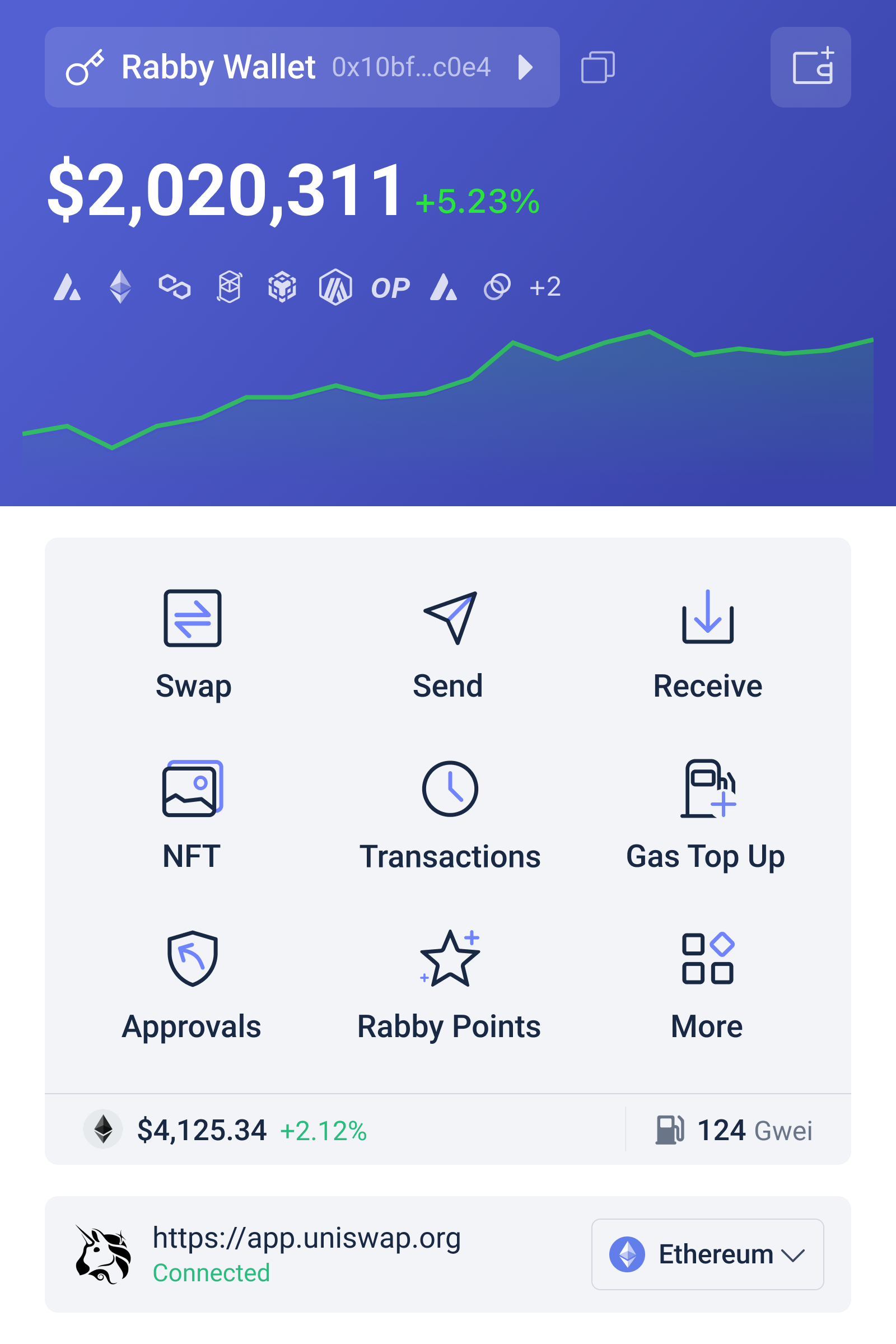
Advanced users who want a security-focused interface can evaluate rabby as part of that workflow, particularly when moving among Ethereum and other EVM chains. The useful criterion is not branding; it is whether the wallet makes the transaction’s consequences more legible before the signature is authorized. A clear warning that interrupts a rushed trade can be more valuable than a sophisticated feature the user never sees.
One non-obvious lesson is that transaction simulation and MEV protection complement each other but solve different problems. Simulation asks, “What is this call likely to do?” MEV protection asks, “Who can observe or influence its path to inclusion?” A user needs both forms of awareness. A private transaction that authorizes a malicious contract remains dangerous; a perfectly legitimate swap can still suffer from public exposure and poor ordering.
What to watch next
The direction of DeFi infrastructure will likely depend on how much execution moves from open transaction broadcasting toward private, batch, and intent-based systems. If these models become easier to integrate, users may receive better execution without manually choosing specialized tools. But the evidence needed to judge success should include more than headline claims about protection. Important signals are actual failure rates, fallback behavior, transparency around routing, distribution of execution surplus, and whether smaller users receive meaningful benefits.
Wallets may increasingly serve as an interpretation layer for this complexity. That role could include explaining contract effects, comparing execution paths, identifying approval scope, and showing when a transaction is exposed to ordering risk. The unresolved question is how much responsibility should sit with the wallet versus the dApp and the underlying protocol. A wallet can improve consent, but it cannot repair flawed market design or guarantee honest behavior from every intermediary.
Frequently asked questions
Does MEV protection guarantee the best price?
No. It may reduce exposure to certain ordering strategies, such as public-mempool sandwiching, but execution still depends on liquidity, price impact, routing, slippage settings, and the behavior of the protocol and block-production infrastructure.
Is transaction simulation the same as MEV protection?
No. Simulation estimates what a transaction is likely to do under a particular chain state. MEV protection changes how the transaction is submitted or ordered. Simulation helps detect unintended effects; protected routing may reduce the opportunity for others to react to the transaction before inclusion.
What should I inspect before signing a DeFi transaction?
Check the network, target contract, token amounts, approval scope, expected balance changes, slippage, and whether the call creates debt or grants ongoing control. Treat unexplained contract interactions or mismatches between the dApp’s description and the wallet’s simulation as reasons to pause.
MEV protection is best understood as an effort to make execution less adversarial, not as a promise that DeFi becomes risk-free. The strongest user experience combines protocol design, responsible dApp integration, private or fair ordering where appropriate, and a wallet that turns opaque calldata into consequences a human can review. That combination does not remove uncertainty. It gives the user a better chance to recognize it before clicking “Confirm.”