
Why I Keep Coming Back to Solscan: A Practical Guide to Tracing SOL Transactions
Okay, so check this out—I’ve been poking around Solana explorers for years. Wow! My first impression was simple: speed matters. Medium latency, high coordination costs, and network quirks make tracing transactions feel like detective work sometimes. Initially I thought Solscan was just a pretty dashboard, but then I dug deeper and realized it’s a lot more: a practical toolkit for on-chain forensics, token research, and everyday wallet sanity checks. Hmm… something felt off about how few people use explorers beyond a quick tx hash lookup. I’m biased, but if you care about Solana activity you should know how to use these tools well. Seriously?
Short story: explorers show raw blockchain truth. Long story: you need to know which fields mean something, how to read Program logs, and when a token is likely a scam versus legitimate. On one hand, a tx looks confirmed. On the other hand, there can be post-confirmation reroutes, failed inner instructions, or tokens minted by programs that mask intent. My instinct said “trust but verify”, so I walked through multiple tx flows and mapped patterns. The result was a handful of repeatable checks that save time and headaches.
First, the basics. Solana transactions are bundles: signatures, instructions, accounts, and recent blockhashes. Wow! Each instruction may call programs (like SPL Token, Serum, or custom programs). Medium: Solscan shows the instruction list and which accounts are read or written. Longer: reading that list, combined with logs, lets you reconstruct what actually happened—who paid fees, which accounts changed balances, and whether a program invoked nested calls that could alter state outside the immediate tx context.
One quick tip before we go deeper—copy the tx signature. Really? Yes. Paste it into Solscan and watch the timeline. Short bursts like that save hours when debugging wallet issues. I still do this when an app says “transaction failed” but my wallet shows a different story. Somethin’ about seeing raw logs calms me (and maybe that’s nerdy). Also, remember that confirmed doesn’t always mean irreversible in the narrow sense of application logic—programs can mint or burn after the fact if they control those accounts—so always check token history.
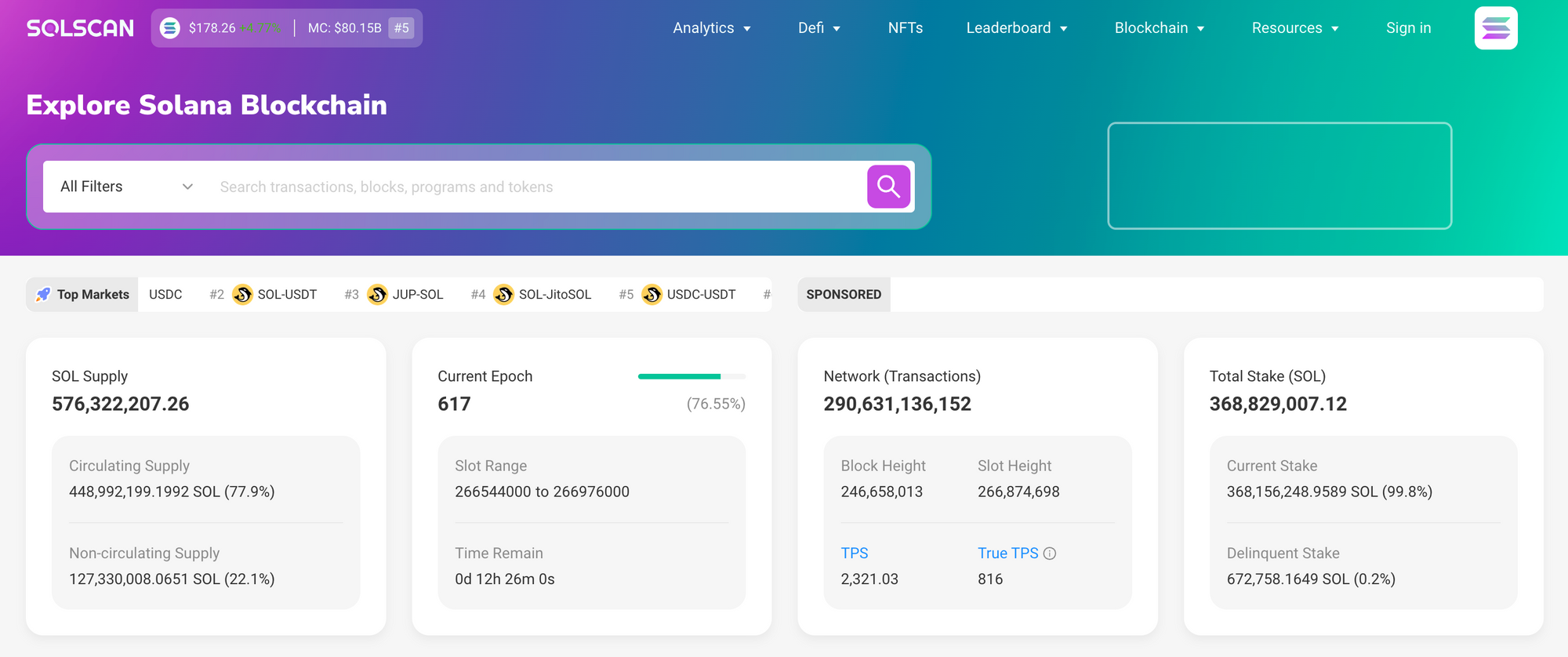
My Checklist for Auditing SOL Transactions (useful for traders and devs)
I keep a short, repeatable checklist whenever a transaction looks odd—this is where the solscan explorer official site becomes my go-to. First, validate the signature and slot number. Then scan the instruction list for unexpected program IDs. Next, read the logs for runtime errors or explicit program messages. Medium: check account balance deltas to confirm token movements align with intent. Longer thought: if a program ID is unfamiliar, trace its history to see other interactions and how often it moves value, because pattern detection often reveals whether something is a one-off experiment, a common utility, or an outright scam.
Whoa! Here’s something that bugs me—many users stop after confirming a transaction and never check token metadata. Medium: token metadata holds the name, symbol, and sometimes a URI that points to off-chain images or project info. Longer: malicious actors can mint tokens with legitimate-looking metadata or reuse names similar to popular projects, so cross-referencing program-controlled metadata with project sites or community channels (and verifying creators) is very very important.
Now for a few deeper drills—these are the moves I use when a swap or transfer behaves weirdly. Short: look at inner instructions. Medium: they reveal nested calls like token transfers triggered by a main program, which normal instruction lists can mask. Longer: deciphering inner instructions often requires reading logs line-by-line, because the outer instruction might be “invoke” and the inner ones tell you what actually moved. Initially I thought inner instructions were rare, but then realized complex swaps and aggregators rely on them heavily.
When tracing token flows, follow the lamports and token amounts separately. Short. Lamports are SOL’s base units and pay fees; token decimals vary and can trick your eyes. Medium: a token transfer of “1,000,000” might actually be 1.0 token if the mint uses six decimals. Longer: always check the mint’s decimals field and token supply to avoid misreading huge on-chain numbers as meaningful value—this mistake has led traders to cancel perfectly good txs and chased ghosts more than once.
Another practical angle—watchlists and labeling. Wow! Labels save cognitive load. Medium: many explorers allow community or curated labels for programs and accounts. Longer: adopting a personal label system (for example, “trusted DEX”, “bridge-escrow”, “suspicious-minter”) makes scans faster, particularly when you’re debugging a multi-hop route across DEXs and bridges during volatile markets. I’m not 100% sure everyone uses labels, but they should.
Security hygiene gets its own paragraph because it’s that important. Short. Don’t blindly trust contract names. Medium: verify the deployer and check for rapid token mints or unusual authority keys. Longer: when a token has a changeable authority or uses a proxy pattern, value can be extracted later by the controller; that’s a structural risk that explorers can help you spot if you know where to look (authority fields, mint configurations, and historical transactions tied to controlling keys).
Developer note—if you build on Solana, instrument your programs with clear logs. Short. Pretty please? Medium: helpful logs make it easier for users and auditors to follow flows. Longer: logs that include human-readable tags (like “swap:start” and “swap:complete”) make off-chain tracing much simpler, and they reduce ambiguity when multiple programs interact in a single slot—and yes, a lot of accidental grief comes from sparse logging.
Okay, here’s a little anecdote (oh, and by the way…): I once traced a failed bridge transfer that looked like money vanished. Short. The tx was confirmed. Medium: Solscan logs showed an inner instruction failing due to a timestamp check in a program that expected a different block height. Longer: the program didn’t refund properly, but a later cleanup transaction returned funds to a separate recovery account—because someone monitored and intervened. That saved a small community fund; would not have been possible without readable logs and the ability to track program-owned accounts.
FAQ
How do I tell if a token is real or a scam?
Check the mint’s transaction history, the authority keys, and the token metadata. Short: look for inconsistent or brand-new mint activity. Medium: verify if the project’s official channels link to that mint address and whether the token has stable liquidity on reputable DEXes. Longer: suspicious signs include changing authority, sudden large mints, or token names that mimic established projects; pair on-chain checks with off-chain verification before interacting.
What if a transaction says “failed” but I still lost funds?
Read the instruction logs and inner instructions. Short. Check which accounts had lamport or token deltas. Medium: sometimes a fee or partial transfer occurs despite a later failure; other times, a program can mint tokens that later become worthless. Longer: the key is reconstructing the sequence—what moved first, which program asserted state changes, and whether a subsequent instruction reversed or refunded the action.